Further Reflections
The Committee of the Regions’ high level dialogue on the future of Cohesion Policy
By Marcus Atkinson, Head of Partnerships and Engagement, Regional Studies Association.
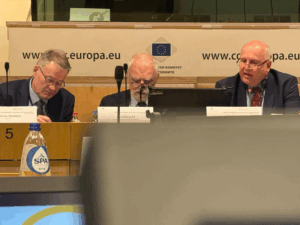
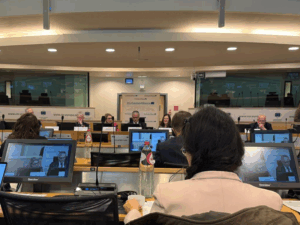
As part of RSA Europe’s ongoing engagement with EU policy debates, I attended the Committee of the Regions’ High-Level Dialogue on the Future of Cohesion Policy on 18 November. Coming only weeks after the European Week of Regions and Cities, this second experience offered a deeper – and at times sharper – picture of the concerns emerging around the next Multiannual Financial Framework (MFF), the future design of Cohesion Policy, and its impact on regions.
If you read my earlier reflection on the EWRC, you’ll recall that this is all new to me: my technical understanding of how the European Parliament, Commission and related committees operate is still growing, and I’m drawing on experience and skills gained in other professional settings to learn and think on my feet. These reflections are simply part of that effort (so please don’t judge me too harshly).
I found the quality and tone of the dialogue throughout the day to be open and encouraging. This was not surprising: all participants had experience working across cultures and languages, and each had arrived in Brussels by different routes and from varied operational structures and ‘ways of doing things’, some were elected by constituents, others appointed through governance systems — collectively representing a wide range of perspectives from across Europe. It was, perhaps, an unusually diverse gathering.
The morning session revealed a broad, shared concern about what lies ahead.
The Chair of COTER, Vasco Alves Cordeiro, opened by underscoring a theme that recurred throughout the event: persistent uncertainty over how Cohesion Policy will operate in practice under the Commission’s July 2025 proposals. His call to find common ground – particularly on the legal value of regional involvement – resonated strongly. So too did the shared sense of urgency: external pressures, territorial disparities, the twin transitions, and geopolitical instability are all placing new demands on an already complex policy framework.
Poland’s Undersecretary of State, Monika Sikora, framed the moment starkly: this is a “vital moment” for Europe’s regions. She stressed that nothing about future Cohesion Policy should be decided without the regions — a refrain also heard at EWRC — especially given the policy’s historic role in reducing territorial disparities and advancing Europe’s green agenda. Others went further, arguing that a threat to Cohesion Policy is a threat to the European project itself.
Representatives from Italy, Poland, Sweden, Malta and others voiced clear frustrations: fears over reduced regional involvement, disappointment over the disappearance of an explicit “just transition” objective, and concerns that national-level simplification may simply replace one system with 27 complicated ones. One Belgian speaker warned that shifting more authority to national governments risked creating “an EU of nations”, at the expense of a more federal and territorially balanced Union.
From the Commission side, Peter Berkowitz outlined the latest adjustments, including proposed regional checks, strengthened monitoring committees, and safeguards for rural, coastal, and transition regions. He sought to reassure participants and counter the idea that the ‘just transition’ was missing from the proposals, stressing that this was now “mainstreamed”. Yet concerns about a drift toward greater national control persisted; many argued that if this shift prevailed, it would fundamentally reshape the EU.
In my earlier reflection, I noted the value of academically robust, evidence-based research in such debates. That was clear here, with Professor John Bachtler’s opening presentation [9:44 to 10:00] which examined what had originally been recommended to the Commission, what the Commission has subsequently proposed, and the concerns that have arisen as a result. Through the lenses of policy, governance and implementation, Prof. Bachtler drew attention to the importance of “geography” in cohesion policy and the need to recognise that global challenges impact territories unevenly simply because their capacity is uneven. Professor Bachtler concluded, very simply, that there has indeed been a downgrading of the EU’s commitment to cohesion.
Afternoon Session
The afternoon dialogue — with contributions from MEPs and national representatives — took on a more procedural tone with a focus on governance. While representatives from member states noted that MFF discussions are ongoing, core concerns persisted: if funding and decision-making in Cohesion Policy became increasingly centred in national governments, what will this mean for Europe’s territorial balance if national political priorities don’t align neatly with long-term, place-based regional needs.
Final Reflections
Overall, the discussions again highlighted a fundamental tension shaping the MFF and Cohesion Policy: is Europe moving toward a more centralised, nationally driven model, or will the Union reaffirm its commitment to strong regional partnership and place-based investment?
From an RSA perspective, the day reinforced the value of evidence-driven dialogue across the research–policy landscape. The message from European regions was clear: simplifying bureaucracy is necessary, but territorial cohesion is not delivered through financial instruments alone. From the regional perspective, cohesion requires structural commitments — commitments that will ultimately shape the future of the European project. Ensuring regions remain meaningful partners will be essential as negotiations progress.
RSA Europe will continue to follow these debates closely and contribute where it can, ensuring that the voices of regional researchers, practitioners, and policymakers remain part of the conversation.