
Reflections on the 2026 ARL International Summer School
New Directions in Urban Infrastructures
By Marcus Atkinson, Head of RSA Partnerships and Engagement
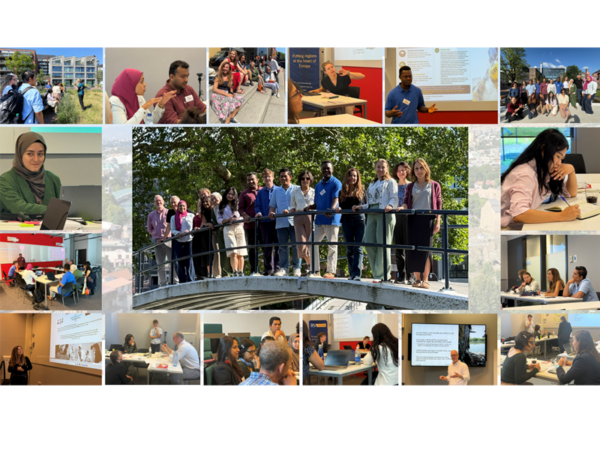
The ARL International Summer School 2026, ‘New Directions in Urban Infrastructures’, took place from 8 to 10 July at the University of Amsterdam, organised in partnership with the Academy for Territorial Development in the Leibniz Association, the University of Amsterdam and the Regional Studies Association /RSA Europe.
Twelve PhD researchers, selected from over 150 applications and based at institutions across eight countries, came together for three days of presentations, masterclasses, workshops and discussion. The group spanned the Global South and Global North, exploring contemporary debates on urban infrastructures, climate change and urban transformation. Research projects took us from the decommissioning of Kolkata’s trams, through community gardens in Bangkok’s upgraded informal settlements and regenerative water systems in climate-impacted Lagos, to the governance of technical and green-blue infrastructure in Germany, Denmark and beyond. The feedback from our mentors was generous, and by the end of the week, the group had formed a genuine community, one that is already continuing beyond Amsterdam. Participant Dr Joel Abah reflected that he left Amsterdam with new connections, renewed motivation and lasting inspiration, a sense shared across the group.
A field trip took us across three Amsterdam neighbourhoods, each representing a different era of urban development: from the ‘working class palaces’ of the Spaarndammerbuurt, built by early 20th-century housing associations, through the Houthavens, a former lumber port transformed into a residential neighbourhood, and on by ferry to the reclaimed NDSM wharf, now a creative and cultural hotspot, ending at the floating community of Schoonschip. The tour examined the idea of Amsterdam as a ‘just city’ and whether it remains one. It touched on the risks of building outside Amsterdam’s dyke protection, experiments in circular and sustainable development and who benefits and the ongoing contests that shape a city’s physical, political and cultural evolution.
A keynote by Prof. Colin McFarlane (Durham University), with discussant Julie Ren, critiqued how ‘crisis’ is presented and discussed in urban studies (crisis is nothing new, he argued, and while the climate crisis adds a wider global imperative, crisis has always presented opportunity and acted as a catalyst for positive change).
Thanks to our mentors, Prof. Dr Jochen Monstadt, Prof. Dr Karin Pfeffer, Dr Fran Meissner, Dr Britta Bockhorn, and Dr Jannes Willems, for their feedback, masterclasses and workshops throughout the week and to our organisers, Dr Jannes Willems, Dr Britta Bockhorn, Barbara Franzo (ARL) and Nicola Pilling (RSA Europe) for making it all happen.
Above all, thanks to ARL for generously funding all participation, and to the University of Amsterdam for hosting us so warmly (with a little help from the Amsterdam sunshine).